_PNG.png)
How Action Figures Build Imagination & Skills in Kids

Updated: Aug 29
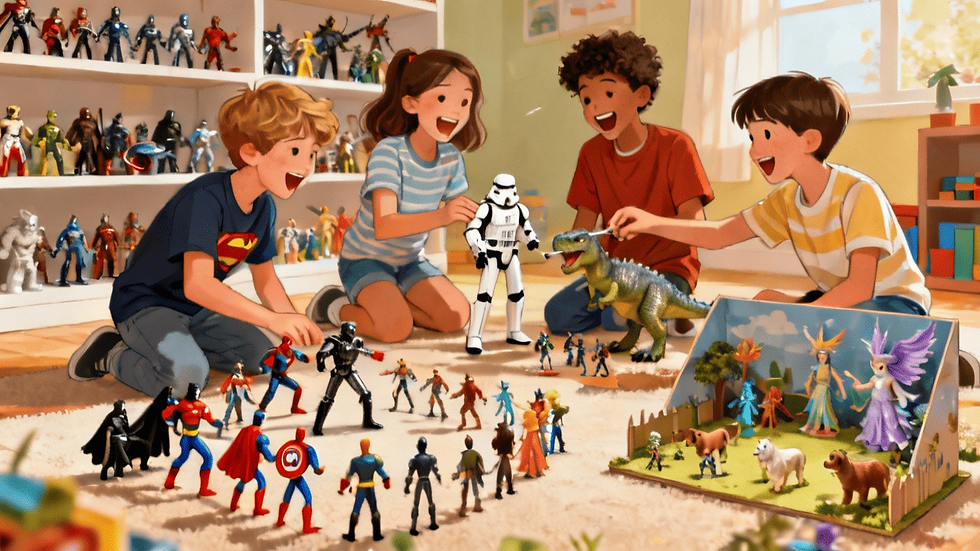
If you’ve ever stood in a toy aisle wondering whether you’re buying a toy or an actual developmental tool, you’re not overthinking it — you’re asking the right question. A lot of parents search specifically for the benefits of action figures for kids before they buy, because a figure with a hefty price tag feels different from a random plastic toy, and it should earn its place on the shelf.
Here’s the honest answer: the benefits of action figures for kids are real, well-documented in early childhood research, and they go well beyond “it keeps them occupied for twenty minutes.”
Why Parents Are Searching for “Screen-Free” Toys Right Now
Screen time guilt is a very real, very common thing among parents today, and action figures have quietly become one of the go-to answers to it. Unlike a tablet game, a figure doesn’t do the imagining for the child — it hands the child raw material (a character, maybe a small backstory) and then gets out of the way. That’s precisely why so many parents are actively hunting for skill-building toys that don’t involve a screen at all.
The Cognitive and Social Benefits of Imaginative Play
When a child picks up two figures and starts assigning them voices, motives, and a plot, several things are happening at once. Storytelling ability develops as the child builds cause-and-effect narratives (“he fell because the other one pushed him”). Empathy grows through perspective-taking — voicing a “villain” character, oddly enough, is one of the more effective ways kids practice understanding a viewpoint that isn’t their own. Problem-solving shows up constantly in figure play, especially when a scenario needs resolving (“how does the hero escape?”). And fine motor skills get a genuine physical workout from manipulating small joints, snapping on accessories, and balancing figures upright — repetitive movements that build hand strength and dexterity in a way that’s easy to overlook.
This is really the core of why the benefits of action figures for kids show up so consistently across age groups: the figure itself is static, but the play around it is entirely generated by the child.
Age-Appropriate Figure Recommendations
Toddlers (under 3): Stick to soft-bodied, chunky figures with no small detachable parts — choking hazard risk is the priority here over articulation or detail. Simple, huggable character toys work better than posable ones at this age.
Ages 5–8: This is the sweet spot for basic articulated figures and vinyl collectibles like Funko Pop — durable enough to survive enthusiastic play, detailed enough to hold a child’s interest, and usually priced sensibly for a toy that might get left in a garden overnight.
Ages 9 and up / collector-grade: Older kids and pre-teens can handle figures with smaller accessories and more delicate joints — this is where licensed Marvel figures and mid-tier anime collectibles start to make sense as gifts.
Balancing Screen Time with Figure-Based Play
A few practical things that actually work: keep figures somewhere visible and easy to reach rather than boxed away, so they compete fairly with a tablet instead of losing by default. Rotate which figures are “out” every couple of weeks — novelty resets interest without needing new purchases. And resist tidying every scene a child builds; leaving a half-finished “battle setup” out overnight often means they return to it the next day instead of starting from scratch on a screen.
Which Franchise Fits Which Age or Interest
Younger kids generally respond best to bright, simple, well-known characters — think basic superhero figures or friendly vinyl collectibles from our Funko Pop guide. Slightly older kids who want more active, physical play tend to gravitate toward blasters and role-play gear, covered in our Nerf Alpha Strike guide. And once a child develops a genuine favourite franchise, the Marvel Toys Collectibles Guide is a good next stop for matching gift ideas to their specific interest.
Frequently Asked Questions
What skills do action figures actually help develop in kids?
Storytelling, empathy through perspective-taking, problem-solving, and fine motor skills from handling joints and small accessories. These are among the most consistently cited benefits of action figures for kids in early-childhood play research.
At what age can a child start playing with articulated action figures?
Generally from around age 5, once the choking-hazard risk from small parts is less of a concern. Under 3, stick to soft, chunky, non-detachable figures.
Are action figures better than digital games for development?
They’re not competing on the same axis — action figures encourage self-generated, open-ended play, while digital games tend to guide the child through pre-built scenarios. Most child-development guidance favours a mix, with unstructured imaginative play (like figures) forming an important part of it.
How do I choose a figure that matches my child’s interests?
Start with a character or show they already love — motivation matters more than “educational value” at this stage. From there, match the figure’s durability and part size to their age group.
Do girls benefit from action figures the same way as boys?
Yes — the cognitive and social benefits of imaginative play aren’t gender-specific. Franchise choice tends to follow individual interest rather than any meaningful gender pattern.


Comments